
Subaru Legacy BN/BS (2015-2019) Owners Manual: Tire pressures and wear
Maintaining the correct tire pressures helps to maximize the tires' service lives and is essential for good running performance. Check and, if necessary, adjust the pressure of each tire (including the spare) at least once a month (for example, during a fuel stop) and before any long journey.
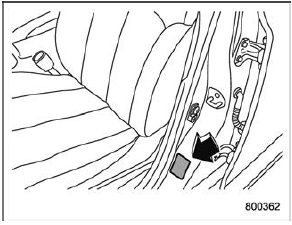
Check the tire pressures when the tires are cold. Use a pressure gauge to adjust the tire pressures to the values shown on the tire placard. The tire placard is located on the door pillar on the driver's side. Driving even a short distance warms up the tires and increases the tire pressures. Also, the tire pressures are affected by the outside temperature. It is best to check tire pressure outdoors before driving the vehicle. When a tire becomes warm, the air inside it expands, causing the tire pressure to increase. Be careful not to mistakenly release air from a warm tire to reduce its pressure. NOTE
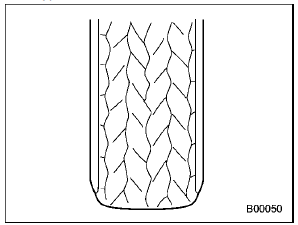
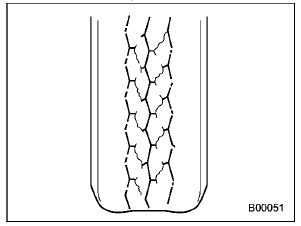
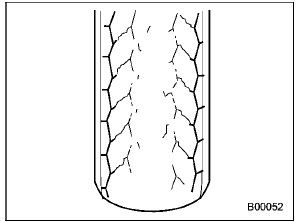
Incorrect tire pressures detract from controllability and ride comfort, and they cause the tires to wear abnormally.
Roadholding is good, and steering is responsive. Rolling resistance is low, so fuel consumption is also lower.
Rolling resistance is high, so fuel consumption is also higher.
Ride comfort is poor. Also, the tire magnifies the effects of road surface bumps and dips, possibly resulting in vehicle damage.
|
 Tire inspection
Check on a daily basis that the tires are
free from serious damage, nails, and
stones. At the same time, check the tires
for abnormal wear.
Contact your SUBARU dealer immediately
if you find an ...
 Wheel balance
Each wheel was correctly balanced when
your vehicle was new, but the wheels will
become unbalanced as the tires become
worn during use. Wheel imbalance causes
the steering wheel to vibrate slightl ...
Other materials:
Adjustment
CAUTION:• When the rearview mirror with compass and home link is removed or replaced, perform calibration and zone setting by following the procedures below.• The zone setting of the vehicle is set to zone “8” at factory setting.1. CALIBRATION1. Before performing calibration, ...
